 The Renaturing Project
The Renaturing Project
The Renaturing Project
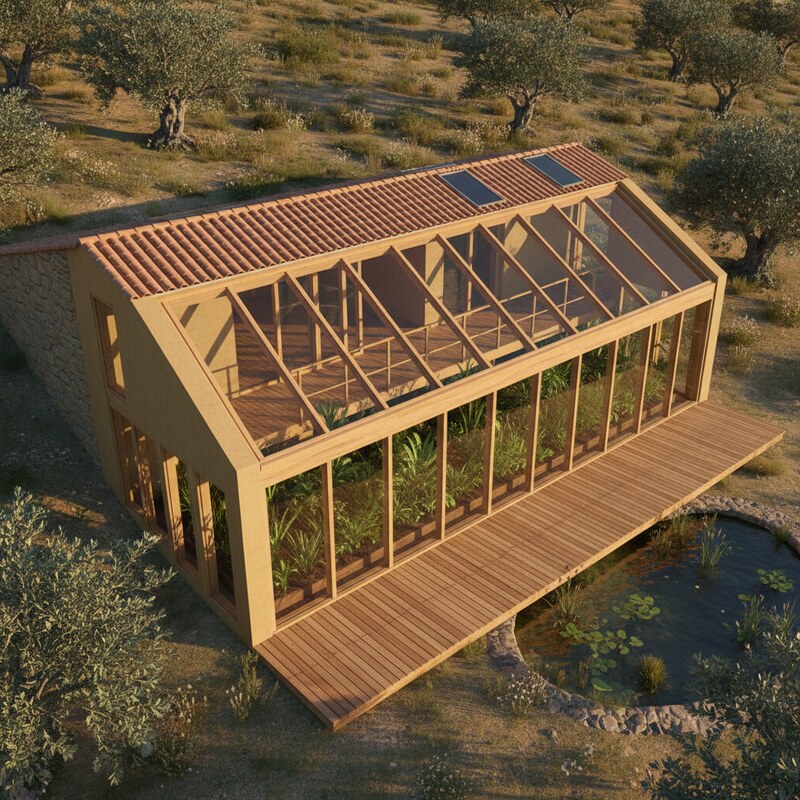
Structures that integrate with their surroundings — sustainable materials, passive climate control, biophilic design, and minimal environmental impact on 23.5 hectares.
ARCHIFUSION brings a deep understanding of Algarvean building traditions combined with modern sustainable architecture. Monia Cardoso designs structures that breathe with the landscape — incorporating local materials, passive solar strategies, and biophilic principles that blur the boundary between inside and outside. Her work emphasizes integration rather than imposition, creating buildings that feel like they've always been part of the terrain.
Every structure at Wild Roots follows principles of ecological sensitivity, energy efficiency, and cultural respect.
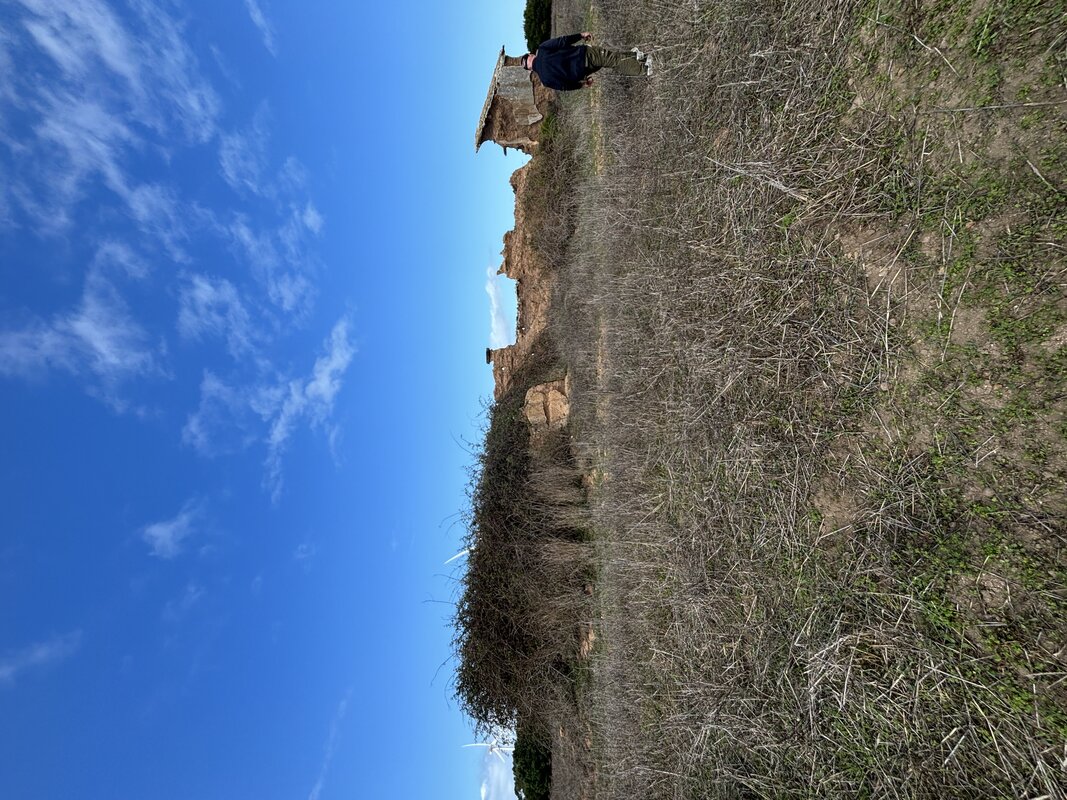
The property includes an existing stone ruin — the remnants of a traditional Algarvean farmstead. Rather than demolishing and rebuilding, the design integrates the ruin as the architectural core, preserving its historical character while adding modern living spaces that extend organically from the original structure.
The thick stone walls provide excellent thermal mass, naturally regulating temperature swings between the hot days and cool nights typical of the Algarve.
🪨 Original stone walls retained and stabilized
South-facing glazing captures winter sun for natural heating, while deep overhangs and deciduous climbers provide summer shading. Cross-ventilation channels the Nortada winds through the building for natural cooling, eliminating the need for air conditioning even during the hottest months.
Thermal simulation shows the design maintains 18–26°C comfort range for 95% of the year without mechanical heating or cooling.
☀️ 3,000+ sunshine hours captured passivelyLocally sourced, low-carbon, and time-tested materials that respect the Algarvean building tradition.
Regionally quarried limestone for walls and foundations. Low embodied carbon, excellent thermal mass, visually harmonizes with the landscape.
Taipa (rammed earth) from on-site subsoil mixed with lime. An ancient Algarvean technique that produces massive, climate-regulating walls with near-zero carbon footprint.
Expanded cork from Alentejo cork oaks. Carbon-negative insulation material — the cork oak absorbs more CO₂ than is released in processing. Naturally fire-resistant.
Traditional cal (lime) renders and mortars instead of cement. Breathable, allowing moisture transfer. Self-healing micro-cracks. Lower CO₂ than Portland cement.
High-performance double-glazed units with recycled glass and argon fill. Maximizes daylighting while minimizing heat loss in winter and gain in summer.
Sedum and native succulent green roof on flat sections. Provides insulation, rainwater attenuation, habitat for pollinators, and reduces urban heat island effect.
Planned structures across the homestead zone, designed for phased construction.
| Structure | Approx. Area | Materials | Function | Phase |
|---|---|---|---|---|
| Main Residence | 180 m² | Stone ruin + rammed earth extension | Primary living space, kitchen, library | Phase 2 |
| Guest House | 60 m² | Rammed earth + cork insulation | Researcher/visitor accommodation (2 rooms) | Phase 3 |
| Workshop & Storage | 90 m² | Limestone + timber frame | Tool workshop, biomass storage, machinery | Phase 2 |
| Greenhouse & Nursery | 120 m² | Recycled glass + timber | Seedling propagation, winter growing, drying | Phase 1 |
| Composting & Processing | 40 m² | Open timber structure | Compost bays, biochar kiln, vermiculture | Phase 1 |
| Education Pavilion | 80 m² | Timber + green roof | Workshops, talks, community events | Phase 4 |
Off-grid systems designed for self-sufficiency in one of Europe's sunniest locations.
A 12 kWp solar PV array with 20 kWh battery storage provides year-round electricity. Solar thermal panels heat domestic hot water. Passive solar design eliminates need for space heating in all but the coldest weeks of winter, when a biomass (wood) stove supplements.
Annual energy balance: production ~18,000 kWh vs. consumption ~8,000 kWh = significant surplus for battery charging, electric vehicles, and workshop tools.
☀️ 225% energy self-sufficiencyRainwater harvesting from all roof surfaces feeds a 30,000 L underground cistern for domestic use. Greywater is treated through a constructed wetland (reed bed) and reused for garden irrigation. Composting toilets eliminate blackwater entirely.
The existing traditional well (poço) provides supplementary water from the Jurassic karst aquifer during extended dry periods.
💧 Zero wastewater discharge