
The People Behind Wild Roots
A vision that began with a ruin and a dream — carried by a team that believes buildings should heal the earth, not harm it.
How It All Began
From a forgotten ruin to a living proof of concept — the origin story of Wild Roots in five chapters.
The Ruin
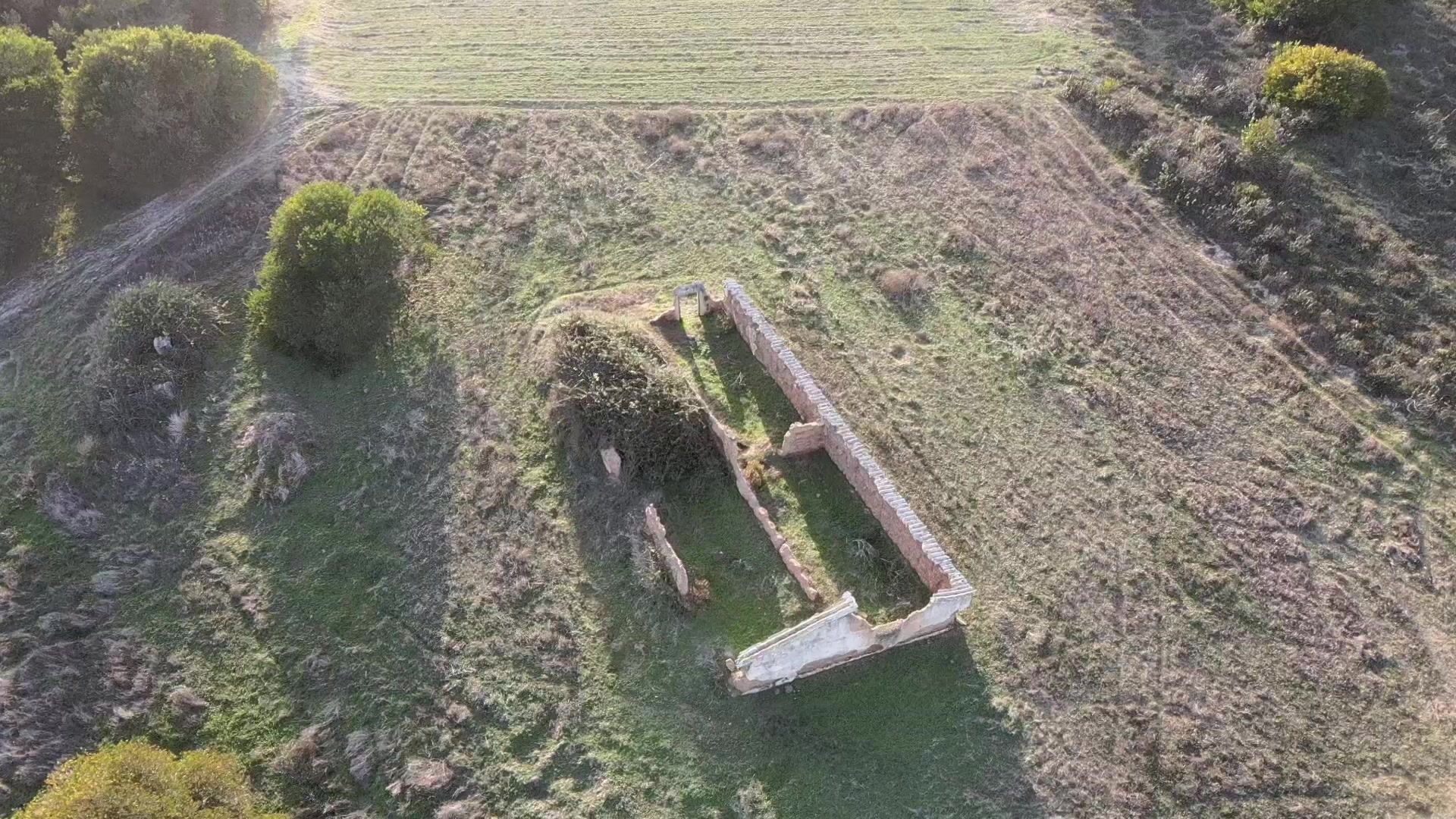
In early 2024, Beate and Marco Merkel discovered a ruined property in the hills of Vila do Bispo, Algarve. It was the kind of place many would overlook: a structure slowly returning to the earth, surrounded by overgrown land and ancient olive trees. But Beate and Marco saw something else. They saw potential. They saw the beginning of a living proof of concept.
The Question
What drew them was not just the ruin itself, but the question it made impossible to ignore: what if we built differently? What if buildings did not merely reduce harm, but actively contributed to ecological repair? What if architecture could store carbon, support biodiversity, and work with the land rather than against it?
The Land
The property extends across 2.325 hectares within the Parque Natural do Sudoeste Alentejano e Costa Vicentina — a protected landscape where every intervention must be carefully justified, measured, and monitored. There are no shortcuts here. The soil is thin, the climate is hot and dry, and the ecological balance is delicate.
The Vision
From the beginning, the vision reached beyond a private project. They saw the possibility of creating a place where regenerative building, renaturation, and practical ecological knowledge could come together. Hempcrete walls that store carbon while breathing with the seasons. Permaculture systems that restore soil life and biodiversity. Water strategies designed around winter rains and long dry periods. A place where architecture, agriculture, and ecology are not in conflict, but in collaboration.
The Purpose
Wild Roots is not a resort, and it is not a luxury retreat. It is a proof of concept, a research-driven initiative, and a statement: the future of building should not force a choice between comfort, responsibility, and ecological intelligence. It should bring them together.
The Team
The people who are making Wild Roots real.
Marco & Beate Merkel
The magic was instant. When Beate and Marco discovered the old ruin, they knew: this place is too valuable for a private vision. Beate came from corporate insurance into permaculture design and sustainability — she brings the long-term perspective of regeneration and community. Marco comes from high-performance computing and AI — drawn to permaculture as an intelligent regenerative system. Together they are turning 2.325 hectares into a hub for renaturation, regenerative building, and open knowledge — for the common good.

Mónia Cardoso
Mónia designed our building plan to embed the house into the natural landscape — not on top of it, but as part of it. Her concept fuses hempcrete construction with the terrain’s contours, maximising passive climate regulation and minimising visual impact. Architecture as a dialogue with nature, not against it.
archifusion.pt ↗Growing Network
It has begun. From university researchers to local farmers, from ICNF park rangers to hemp suppliers — Wild Roots connects knowledge with practice. Our network is growing, and every voice strengthens the whole.
Follow us on LinkedIn ↗Our Values
The principles that guide every decision at Wild Roots.
Zero Compromise on Facts
Every claim on this website is verifiable. We measure, we document, we prove. Our data hub is public. Our methodology is transparent. We don't make promises we can't back up with evidence.
Nature First
We don't build on nature. We build with it. Hempcrete sequesters CO₂. Permaculture regenerates soil. Water flows with the land, not against it. Every decision is filtered through a single question: Does this heal or harm?
Open Knowledge
Our data is open. Our tools are free. Our research is shared. We believe the solutions to climate breakdown won't come from proprietary secrets or walled gardens. They come from communities that learn together.
Our Journey
Key milestones in the Wild Roots story.
Property Acquisition
Purchase completed via Escritura on 6 November 2024. A 2.325-hectare site in Vale do Paço with a 206 m² pre-1951 stone ruin — the foundation for everything that follows.
Preliminary Consultations
Meetings with Câmara Municipal de Vila do Bispo, CCDR Algarve, and ICNF. Architectural pre-study completed by ARCHIFUSION. Site surveys and ecological baseline assessment.
Formal Applications
Submission of RAN reclassification request and building permit application under DL 10/2024 Simplex framework. Environmental impact assessment and Natura 2000 compatibility review.
Awaiting Decision
Building permit and RAN reclassification under review by Câmara Vila do Bispo, CCDR Algarve, and DGADR/DGT. Website launched as public documentation of the project’s scientific and ecological mission. We are here.
Construction Phase
Upon approval: reconstruction of the existing ruin using bioclimatic design principles, development of permaculture infrastructure, and launch of the ecological monitoring programme.
Want to be part of this journey?
Wild Roots is more than a building project. It's an invitation to think differently about how we live on this land. Whether you're interested in our research, our tools, or simply want to stay updated — we'd love to hear from you.
Get in Touch