
Regulatory Compliance
Transparent documentation of all permits, regulations, and legal frameworks governing the Wild Roots renaturation project. Working cooperatively with Portuguese authorities to ensure full compliance.
Pre-1951 Building Documentation
The existing structure predates modern building codes and benefits from legal protections for historical buildings.
Artigo Matricial 1827
Registered in the Caderneta Predial Urbana as Article 1827, the building is classified as a pre-1951 structure. This classification provides important legal protections under Portuguese building law.
206 m² Building Footprint
The original building covers 206 square metres with a recorded height of 4.12 metres. One storey with three compartments, classified for residential use (Habitação).
Declaração de Ruína
Officially declared as a ruin on 10 May 2021. This declaration, combined with the pre-1951 status, establishes the legal basis for reconstruction rather than new construction.
Historical Agricultural Use
The property’s rustic component (Matriz Rústica Nr. 38) is classified as CA — Cultura Arvense (arable farming), Class 3 (medium-low agricultural suitability). Total area: 2.325 hectares (23,250 m²).
Legal Basis
Two key legal instruments provide the framework for the reconstruction and development of the property.
DL 10/2024 — Simplex Urbanístico
Decreto-Lei 10/2024 introduced simplified licensing procedures for building renovations and reconstructions. This “Simplex” framework reduces bureaucratic complexity and accelerates the permitting process for projects that restore existing structures, particularly in rural areas.
Artigo 60 RJUE — Bestandsschutz
Article 60 of the Regime Jurídico da Urbanização e Edificação (RJUE) establishes the principle of existing building protection (Bestandsschutz). Pre-1951 buildings enjoy grandfathered rights, meaning they can be reconstructed to their original dimensions without requiring full compliance with current building codes.
RAN Reclassification
The path from agricultural reserve land to integrated permaculture and renaturation use.
Current Classification
The land is currently classified under the Reserva Agrícola Nacional (RAN) as Classe 3 — medium to low agricultural suitability. This classification places restrictions on non-agricultural development.
Target: Apoio Agrícola
We are pursuing reclassification to “Apoio Agrícola” (Agricultural Support), which permits structures directly supporting agricultural activity. Permaculture, renaturation, and ecological education are recognised agricultural support activities.
CCDR Algarve
The Comissão de Coordenação e Desenvolvimento Regional (CCDR) Algarve is the competent authority for RAN decisions in the Algarve region. Process reference: ER-RAN 179/2024.
Portaria 162/2011, Alínea n)
This ordinance defines the types of activities and structures permitted within RAN areas. Alínea n) specifically covers buildings and infrastructure for agricultural support, providing the legal basis for our application.
Nature Park Cooperation
Working within the Parque Natural do Sudoeste Alentejano e Costa Vicentina (PNSACV) and Natura 2000 network.
ICNF Partnership
The Instituto da Conservação da Natureza e das Florestas (ICNF) oversees the PNSACV. Our project aligns with ICNF’s conservation objectives through habitat restoration and endemic species protection.
Natura 2000
The property lies within the Natura 2000 network (Costa Sudoeste PTCON0012). Our renaturation programme directly supports the network’s habitat conservation objectives.
Monitoring Commitment
We commit to long-term ecological monitoring including biodiversity indices, soil health metrics, water quality, and vegetation recovery. All data is published via our open-access Data Hub.
Research Partnerships
Collaboration with the University of Algarve (UAlg), CEABN/ISA, cE3c, and CCMAR provides scientific rigour to our monitoring and ensures alignment with current conservation science.
Project Timeline
Key milestones from acquisition to expected construction start.
Property Acquisition
Purchase completed via Escritura on 6 November 2024. Registered at Conservatória do Registo Predial de Tábua.
Preliminary Consultations
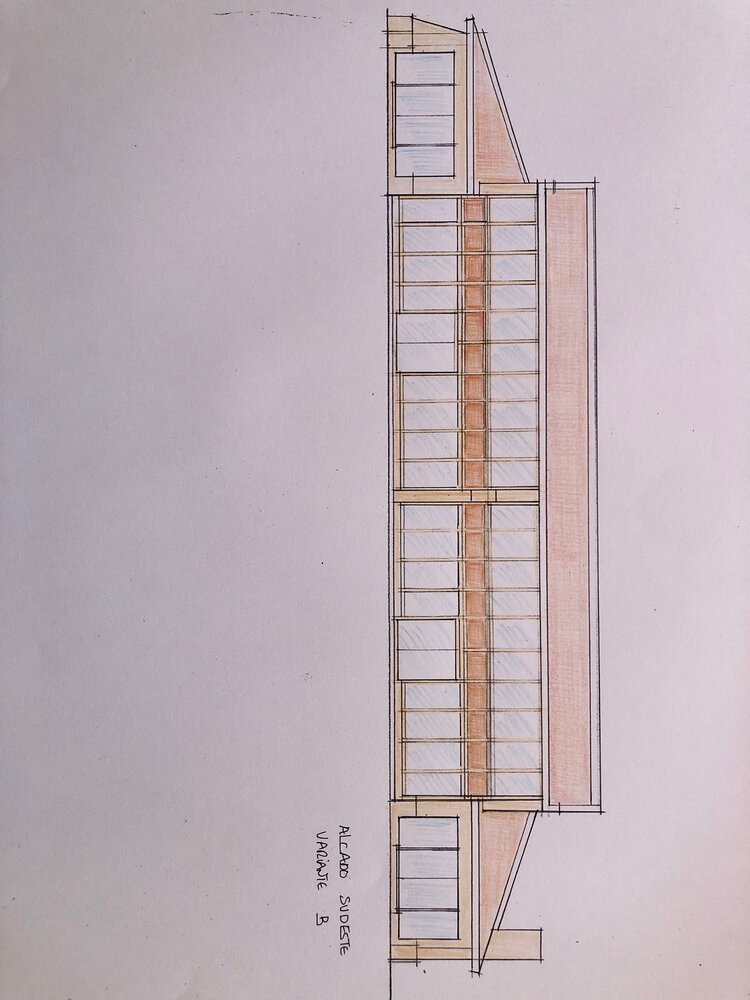
Meetings with Câmara Municipal de Vila do Bispo, CCDR Algarve, and ICNF. Architectural pre-study by ARCHIFUSION.
Formal Applications
Submission of RAN reclassification request and building permit application under DL 10/2024 Simplex framework.
Expected Decision
Anticipated permit decision from the relevant authorities.
Construction Phase
Upon approval: reconstruction of the existing ruin and development of permaculture infrastructure.
Involved Authorities
Overview of all regulatory bodies involved in the permitting process.
Câmara Municipal de Vila do Bispo
Municipal authority responsible for issuing building permits (licença de construção) and urban planning compliance.
ICNF / PNSACV
Instituto da Conservação da Natureza e das Florestas. Responsible for Natura 2000 compliance and nature park regulations.
CCDR Algarve
Comissão de Coordenação e Desenvolvimento Regional. Handles RAN reclassification and regional spatial planning.
DGADR / DGT
Direção-Geral de Agricultura e Desenvolvimento Rural / Direção-Geral do Território. National oversight of agricultural classification and land use.